
 By admin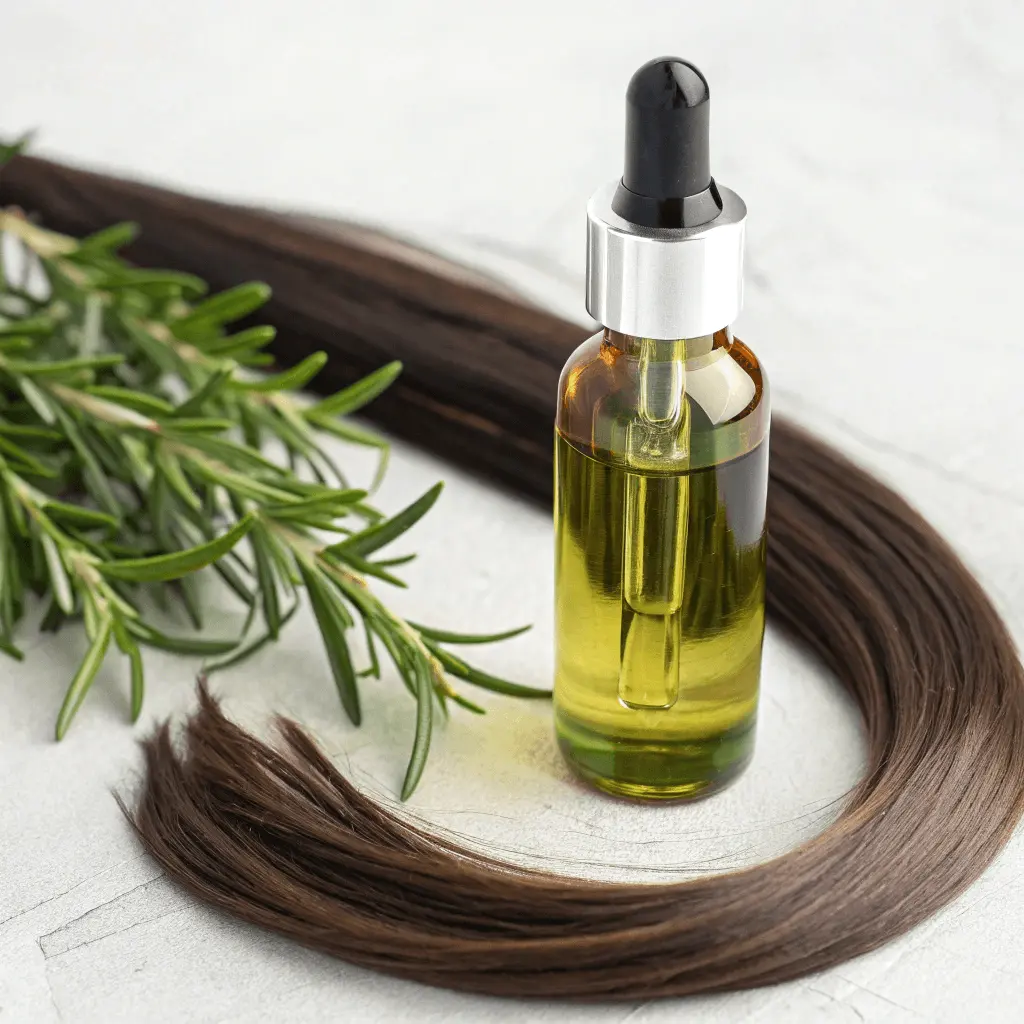
Rosemary oil is a popular essential oil that’s been around for centuries. Over the years, it’s been useful as an anti-inflammatory aid, skin care product, and even a hair loss solution.
So, does rosemary oil thicken hair? In short, yes, but make sure you stick around to learn more about how exactly it can help.
What Is Rosemary Oil?
Rosemary oil comes from the rosemary plant, or Rosmarinus officinalis. The oil is derived from the leaves and flowering tips of the rosemary plant.
Rosemary oil is known for being herbal, fresh, and even a little woody when you run it through an aroma diffuser.
That said, it’s also useful for topical application. Rosemary oil can be used for skin care, hair care, pain relief, and even mental focus. For these reasons, you’ll find it has been used in holistic healing applications for centuries.
While this may be the case, you should always consult with a doctor before you use rosemary oil, especially if you want to use it to thicken your hair. Also, make sure you conduct a patch test before applying rosemary oil, or any other oils for that matter, to your scalp.
Does Rosemary Oil Thicken Hair?
The short answer is yes, but it’s a little more complicated than that.
Studies have shown that rosemary oil application may stimulate the scalp and boost hair growth, and in certain instances, it’s been as effective as some medications. However, this varies greatly on a case-by-case basis, and the research is still ongoing.
How Rosemary Oil Thickens Hair
When it comes to thickening hair, rosemary oil may accomplish this in a few ways.
Improves Blood Circulation in Your Scalp
Rosemary oil can help stimulate blood circulation for your scalp. It can draw more blood to your scalp, which provides nourishment for your hair follicles.
The result? A healthier-looking head of hair.
Rosemary Oil May Block the Hormone Dihydrotestosterone (DHT)
When using treatments to preserve your hair, you’ll find that many of them target dihydrotestosterone (DHT). This hormone is what results in hair loss for many people, so preventing it from surfacing can potentially help you reduce hair loss.
While this varies and needs more research, it’s possible that rosemary oil can block DHT.
Helps With Inflammation
Another benefit of rosemary oil is that it can soothe inflammation. This can protect your scalp and reduce the impact of fungal and bacterial growths that lead to hair loss.
Of course, you should consult with a doctor before you use rosemary oil for this application, but early research on it is promising.
How to Use Rosemary Oil for Hair
To use rosemary oil for hair, the steps are simple. First, mix around four to five drops of rosemary oil with around a tablespoon of carrier oil. This ensures that it’s not too potent for your scalp. From there, you’ll want to massage the mixture into your scalp for around five to ten minutes.
If you don’t want to make the mixture yourself, many shampoos and conditioners serve as a good foundation. Therefore, you can always add a few drops of rosemary oil for hair to your hair care products to get the mixture you need without the extra steps.
Just be mindful that certain ingredients may interact poorly with the rosemary oil and impact the overall effect. When in doubt, reach out to the company directly to find out if a product can be mixed with rosemary oil.
Does Rosemary Oil Thicken Hair? The Verdict
So, does rosemary oil thicken hair? The verdict is yes, but you should always consult with a licensed medical professional before you leverage this oil.
Once you’ve been given the all clear, you should also get a rosemary oil formulated for hair to ensure that you’re getting the best possible results. If you don’t, you may end up wasting time, money, and worse, your hair.